RMIT University
Location
Australia

QS Ranking 2025
123
+17Student Satisfaction
81.9%
Graduates Employability
86.9%
Int. Student Percentage
24%
Int. Fee Range
AUD 22,080 to AUD 47,645/pa
Overview
RMIT University is one of Australia’s largest higher education providers, operating across four academic colleges and offering a range of undergraduate, postgraduate, and vocational programmes. The main campus is situated in Melbourne, and other campuses are located in Brunswick, Bundoora, and Vietnam, underscoring its global presence.
Extended Overview
RMIT University is a global leader in technology, design, and enterprise, recognised internationally for excellence in art and design, architecture, engineering, business, and computer science. As Australia’s largest dual-sector university, it offers vocational, undergraduate, postgraduate, and research programmes through four academic colleges and sixteen schools, emphasising an industry-informed curriculum.
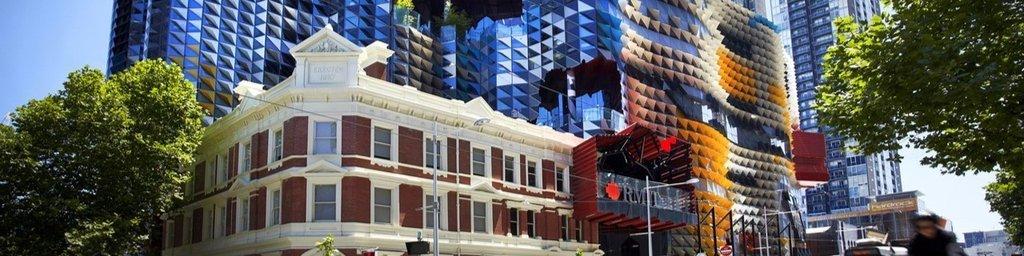
The Melbourne City campus features advanced, sustainable facilities such as the Design Hub and Swanston Academic Building. Additional campuses include Brunswick and Bundoora in Melbourne and Ho Chi Minh City, Hanoi, and Danang in Vietnam. RMIT also maintains strategic research partnerships worldwide.
RMIT ranks in the top 300 globally in the Times Higher Education World University Rankings and top 125 in the QS World University Rankings. It ranks in the top 5 globally for reducing inequalities (SDG 10) and scores highly for governance, environmental responsibility, and social impact, reflecting its commitment to sustainability and global impact.
Mission Statement
RMIT aims to deliver future-focused, industry-connected education, emphasising digital innovation, creativity, and real-world learning. It connects students, experts, and employers to develop practical skills, entrepreneurship, and global engagement. RMIT supports Aboriginal and Torres Strait Islander students and promotes inclusive access. With a history of driving industrial change, RMIT shapes urban and industrial futures through advanced technology, interdisciplinary learning, and community impact.
History
RMIT University began as the Working Men’s College in 1887, with the aim of providing practical education to Melbourne’s working people. Over decades, it has transformed into a global university known for technology, design, and enterprise.
Key Milestones:
- 1887: Founded as the Working Men’s College through the philanthropy of Francis Ormond.
- 1888: Began offering classes to both men and women in arts, business, and trades.
- 1899: Introduced full-time courses in engineering and applied science.
- 1934: Renamed Melbourne Technical College.
- 1939–1945: Trained 20,000 servicemen during World War II.
- 1954: Granted royal patronage by Queen Elizabeth II; renamed Royal Melbourne Technical College.
- 1960: Became the Royal Melbourne Institute of Technology (RMIT).
- 1979: Amalgamated with Emily McPherson College of Domestic Economy.
- 1992: Achieved university status and became RMIT University.
- 1994: Became the first Australian university to adopt an international teaching strategy.
- 2001: Opened RMIT International University Vietnam in Ho Chi Minh City.
- 2004: Expanded to Hanoi with a second Vietnam campus.
- 2009: Became one of Australia’s first Fair Trade Universities.
- 2012: Opened the Swanston Academic Building and Design Hub in Melbourne.
- 2013: Opened a European centre in Barcelona, Spain.
- 2015: Awarded Vietnam’s prestigious Golden Dragon Award for the 12th consecutive year.
Campus Facilities
- Food and drink
- Student spaces and access hours
- Student meeting rooms
- Sports and recreation
- Vietcombank cashier counter
Courses
Undergraduate Courses:
Study areas:
- Architecture
- Art
- Aviation
- Biomedical sciences
- Building
- Business
- Communication
- Design
- Education
- Engineering
- Environment
- Fashion
- Health
- Information technology
- Law
- Media
- Property
- Psychology
- Science
Postgraduate Courses:
Study areas:
- Architecture
- Art
- Aviation
- Biomedical sciences
- Building
- Business
- Communication
- Design
- Education
- Engineering
- Environment
- Fashion
- Health
- Information technology
- Law
- Media
- Property
- Psychology
- Science
- Social and community
Divisions and Departments
Departments
Schools
- School of Accounting, Information Systems & Supply Chain
- School of Architecture and Urban Design
- School of Art
- School of Computing Technologies
- School of Design
- School of Economics, Finance and Marketing
- School of Education
- School of Engineering
- School of Fashion and Textiles
- School of Health and Biomedical Sciences
- School of Global, Urban and Social Studies
- School of Law
- School of Management
- School of Media and Communication
- School of Property, Construction and Project Management
- School of Science
Faculty and Staff
- Vice-Chancellor and President: Professor Alec Cameron.
- Deputy Vice-Chancellor of Business and Law and Vice President: Professor Colin Picker.
- Deputy Vice-Chancellor VE: Mish Eastman.
Student Life
RMIT Vietnam offers a vibrant student life with over 50 student-run clubs and societies that include sports, culture, business, community service, recreation, and social interests. Students can join existing clubs at Saigon South and Hanoi campuses or start their own. The university also hosts numerous events and activities throughout the year, such as Carnival Day, Club Day, Sports Day, Pride Week, and International Day, creating a lively, inclusive campus experience.
Student Statistics
- Total Students- 90,287
- International Students- 20,170
- International Onshore Students- 12,585
- International Offshore Students- 6,847
Academic Year: 2022- 2023
Transportation
myki Card:
A reusable travel card is required for Melbourne’s trains, trams, and buses. Use myki Money for occasional travel or myki Pass for regular travel. Available at retail outlets, myki machines, and train stations.
Free Tram Zone:
The Melbourne Free Tram Zone covers the city centre, but RMIT University is just outside this zone. You need a valid myki to travel to RMIT.
Concession Travel:
Eligible full-time undergraduate students can apply for a PTV Tertiary Student ID to receive discounted fares. International undergraduates may qualify for the iUSEpass, which offers half-price fares. Postgraduate and part-time students generally aren’t eligible for concessions.
Night Network:
Night trams, trains, and buses operate on weekends, including Route 67, which directly serves the RMIT City Campus.
Key Transport Routes:
Trams (nearest stops to RMIT City Campus):
- Route 1, 3/3a, 5, 6, 8, 16, 64, 67, 72 – Stop 7 (RMIT University/Swanston St)
- Route 19, 57, 59 – Stop 5 (Melbourne Central Station/Elizabeth St)
- Route 30, 35 – Stop 6 (Swanston St/La Trobe St)
Trains:
- Melbourne Central Station (City Loop) – Walk from Swanston Street exit to campus.
Buses (nearest stops to RMIT City Campus):
- Major stops: Melbourne Central/Lonsdale St and Swanston St/Lonsdale St
- Frequent weekday routes: 200, 207, 250, 251, 302, 303, 304, 305, 309, 318, 350, 402, 605, 905, 906, 907, 908
Housing and Accommodation
RMIT students can choose from a variety of housing options, each tailored to different preferences, budgets, and lifestyles:
Purpose-Built Student Accommodation
These are student-specific apartments near campus that meet quality standards. These accommodations offer furnished rooms, utilities included, and a supportive community with easy access to university services.
Private Rentals
Students can rent houses or apartments privately under lease agreements. Leases are often 12 months in tenure.
Share Houses
Share houses provide a private room with shared common spaces. This is an affordable and flexible option.
Homestay
Living with a local family or homestay offers a furnished room, meals, and a welcoming environment. It's a great option for international students adjusting to life in Melbourne.
Student Hostels
Hostels have furnished, lockable rooms with shared facilities. Some hostels include meal plans. These are convenient for students seeking community living near campus.
Short-Term Accommodation
Short-term options like hotels or serviced apartments help new students settle before finding permanent housing. Arriving early is recommended to explore longer-term choices.
Extracurricular Activities
- Career fairs and development events
- Creative workshops and masterclasses
- Social and cultural activities
- Health and fitness sessions (dance, meditation, sports)
- Public art installations and exhibitions
- Game tournaments and recreational events
- Orientation Week (O Week) activities
- Campus Fest and club sign-up events
- Film screenings and cultural festivals
Partnerships and Collaborations
- ARC Centre of Excellence for Automated Decision-Making and Society
- ARC Centre of Excellence for Environmental Decisions
- ARC Centre of Excellence for Quantum Computation and Communication Technology
- ARC Centre of Excellence for Transformative Meta-Optical Systems (TMOS)
- ARC Centre of Excellence in Exciton Science
- ARC Centre of Excellence in Future Low-Energy Electronics Technologies (FLEET)
- ARC Centre of Excellence in Optical Microcombs for Breakthrough Science
- ARC Industrial Transformation Training Centre in Additive Biomanufacturing
- ARC Research Hub for Advanced Manufacturing of Personalised Medical Devices
- ARC Research Hub for Australian Steel Manufacturing
- ARC Training Centre for Surface Engineering for Advanced Materials
- ARC Training Centre for the Transformation of Australia’s Biosolids Resource
- ARC Training Centre in Cognitive Computing for Medical Technologies
- ARC Training Centre in Fire Retardant Materials and Safety Technologies
- ARC Training Centre in Lightweight Automotive Structures (ATLAS)
- Australian Composites Manufacturing CRC
- CRC for Reliable Affordable Clean Energy for 2030
- Digital Health CRC
- End Food Waste CRC
- Food Agility CRC
- Future Fuels CRC
- IMove CRC
- SmartCrete CRC
- SmartSat CRC
- Solving Plastic Waste CRC
- Trusted Autonomous Systems CRC
- Australian Centre for Electromagnetic Bioeffects Research
- Australian Prevention Partnership Centre
- China-Australia International Research Centre for Chinese Medicine
Key Alliances and Initiatives:
- European Connected Health Alliance (ECHAlliance)
- Melbourne Digital Health Ecosystem (part of ECHAlliance, hosted by RMIT)
- Digital Health Cooperative Research Centre (Digital Health CRC)
- Skills for Health - Thematic Innovation Ecosystem (TIE)
Research Opportunities
RMIT University is recognised for its impactful, industry-connected research across diverse fields. Its research expertise is organised through specialised Research Centres, extensive collaborations, and innovative Enabling Impact Platforms that cultivate cross-disciplinary teamwork to address real-world challenges.
Research Areas
- Advanced Materials, Manufacturing and Fabrication
- Biomedical and Health Innovation
- Design and Creative Practice
- Global Business Innovation
- Information in Society
- Social Change
- Sustainable Technologies and Systems
- Urban Futures
Key Research Centres
RMIT houses numerous specialised centres addressing both applied and fundamental research:
- Business and Human Rights Centre
- Centre for Additive Manufacturing
- Centre for Advanced Materials and Industrial Chemistry (CAMIC)
- Centre for Cyber Security Research and Innovation
- Centre for Innovative Structures and Materials (CISM)
- Centre for International Development
- Centre for Materials Innovation and Future Fashion (CMIFF)
- Centre for Nature Positive Solutions
- Centre for Organisations and Social Change (COSC)
- Centre for Urban Research
- Centre of Digital Ecosystems (CODE)
- Digital Ethnography Research Centre (DERC)
- Integrated Photonics and Applications Centre (InPAC)
- Post-Carbon Research Centre
- Satellite Positioning for Atmosphere, Climate and Environment
- Sir Lawrence Wackett Defence and Aerospace Centre
- Social Equity Research Centre (SERC)
- Water: Effective Technologies and Tools (WETT) Research Centre
Collaborations and Networks
RMIT actively participates in national and international research collaborations, including:
- ARC Centres of Excellence (e.g., Automated Decision-Making, Environmental Decisions, Quantum Computation)
- Industrial Transformation Training Centres (focused on manufacturing, medical devices, surface engineering, cognitive computing, automotive structures)
- Cooperative Research Centres (CRCs) specializing in composites, clean energy, digital health, food waste, fuels, smart materials, and autonomous systems
Fees and Scholarships
Tuition fees
- Tuition fees for international students may vary by programme (Undergraduate and Postgraduate).
Scholarships
- Coursework Scholarships
- Research Scholarships and Grants
- Scholarships for Commencing International Students
- External Scholarships
- Financial Assistance for Global Experiences
- Australia Awards Scholarships
- RMIT Funded Scholarships
- External Scholarships (Sponsorship)
Alumni Network
- James Wan – Film actor, screenwriter, film director, writer, executive producer
- Leigh Whannell – Film actor, screenwriter, film director, manufacturer, director
- Gillian Chung – Actor, singer
- Judith Durham – Singer-songwriter, pianist, jazz musician, singer
- Wu Chun – Model, actor, singer
- Elaine Yiu – Actor
- Charlie Vickers – Actor
- Greig Fraser – Cinematographer
- Toni Rakkaen – Actor, film actor, model, television actor, hairdresser
- Andrew Stockdale – Singer, guitarist
- Kevin Yeung – Politician
- Jim Stynes – Australian rules football player, rugby union player, Gaelic football player
Career Services
RMIT University provides a wide range of career services and opportunities to help students and recent graduates successfully plan their careers, secure employment, and develop the skills that top employers are seeking.
Through Career Connect, students can access personalised career support, including one-on-one consultations, resume and cover letter advice, job application assistance, and interview preparation.
The university hosts career events and workshops throughout the year, such as resume writing sessions, industry networking events, and employment fairs. Students can also gain valuable experience through volunteering opportunities and on-campus jobs, helping them build practical, job-ready skills.
RMIT’s Career Centre is an online hub where students can search for job and internship listings, register for events, and access career-building resources anytime. Additionally, RMIT offers career mentoring, connecting students with over 800 industry professionals who can provide guidance and insights.
The university also supports career development through leadership programmes, Work Integrated Learning (WIL) advice, and the RMIT Plus co-curricular skills recognition program, which helps students enhance their life and employability skills.
Rankings and Achievements
QS World University Rankings 2026:
- 125th globally
- 10th in Australia
Times Higher Education (THE) World University Rankings 2025:
- 251-300 globally
- Equal 14th in Australia
Impact and Sustainability Rankings
THE Impact Rankings 2025:
- 56th overall globally
- 5th globally for Reducing Inequalities (SDG 10)
- 30th for Decent Work and Economic Growth (SDG 8)
- 85th for Climate Action (SDG 13)
- 11th in Australia overall for sustainability achievements
Location
- Melbourne City Campus: Located in the vibrant heart of Melbourne, surrounded by excellent public transport, dining, arts, and cultural venues.
- Bundoora Campus: Situated in Melbourne’s north-eastern suburbs, this campus offers a peaceful parkland setting with outdoor sports facilities.
- Brunswick Campus: Located 6 km north of the city, this campus is in a creative, multicultural district known for markets, shops, pubs, and a lively arts and music scene.
International Presence:
- Vietnam: Two campuses.
- Spain: A research and industry collaboration centre.
- Partner programmes: Offered through partner institutions in Singapore, Hong Kong, mainland China, Indonesia, Sri Lanka, India, Belgium, Germany, Austria, and the Netherlands.