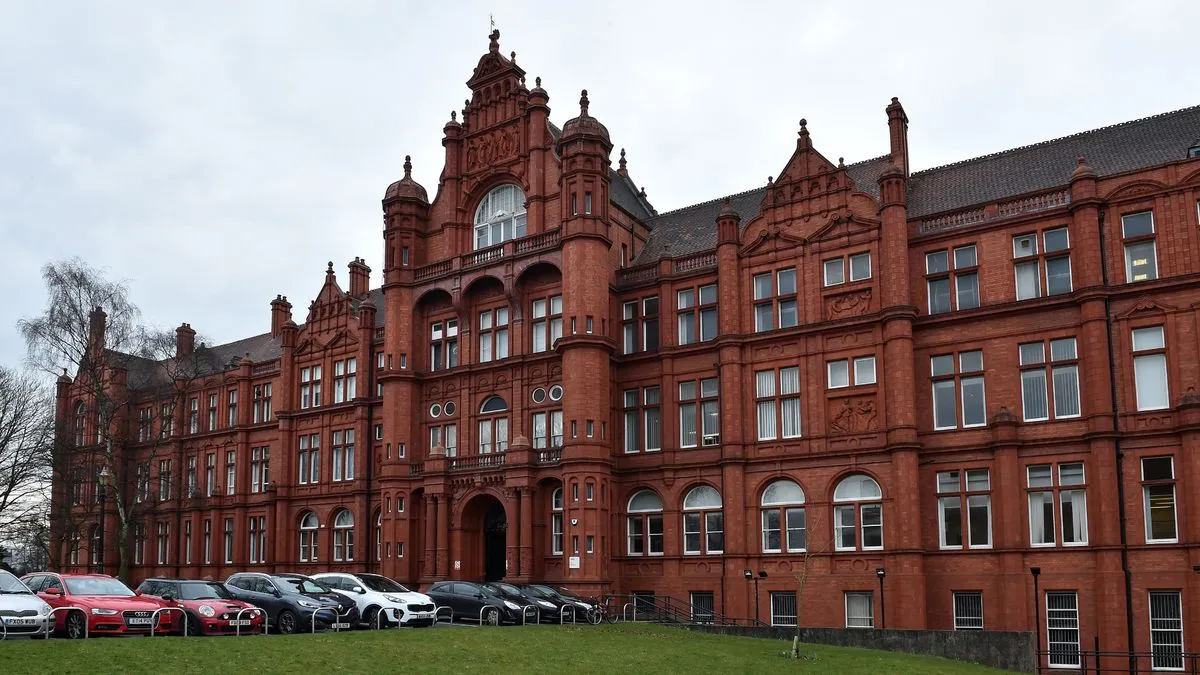

University of Salford
Location
United Kingdom
Courses Available
1+ Courses

QS Ranking 2025
901
-50Guardian University Ranking 2024
88
+1Students Satisfaction
80%
Graduate Employability
86%
Int. Student Percentage
11%
Int. Fee Range
£15,720 to £20,340/pa
Overview
The University of Salford, UK, is a public university. It has 125 years of proud progress history. From standard courses to research programmes, it is an unstoppable institute.
The university also has a dedication to environmental sustainability and industry initiatives. Salford has a clear vision to serve people and the economy through their every activity. Studying in Salford will surely make the students feel their potential.
Extended Overview
A public research university, the University of Salford, Greater Manchester, England, has a rich history dating back to 1850. With 26,260 students across three campuses, it is known for its strong industry links in engineering, media, and business.
The university offers career-focused curriculums, real-world experience, and state-of-the-art facilities. Its commitment is to transform lives, stimulate discovery, and realize potential through teaching, learning, research, and enterprise activities.
The USAL or University of Salford’s strategic priority is industry collaboration, fostering strong relationships in all aspects of its business, including curriculum co-creation, job-ready graduates, research, consultancy, and knowledge exchange.
Mission Statement
"Transforming lives. Stimulating discovery. Realising potential - University of Salford."
The university strives to bring together the talents, imagination, and enthusiasm of its students and staff in collaboration with enterprises in the public, private, and charitable sectors.
This collaborative effort aims to transform people and communities and provide lasting economic and social benefits through teaching, learning, research, enterprise, and other professional activities.
History
The University of Salford, UK, is a formation of two institutes. Back in the late eighteenth century, there was a demand for new industrial skills. As a result, Pendleton Mechanics Institute 1850 was formed. And after eight years, people got the Salford Working Men’s.
In 1896, York’s Duke and Duchess merged the two institutes. Then they opened the Royal Technical Institute in Salford.
Later history says:
- 1921: The Royal Technical Institute, Salford, adopted another name: Royal Technical College, Salford.
- 1958: The college was divided into two organisations. Those are the Royal College of Advanced Technology and Peel Park Technical College. Peel Park Technical College changed its name three more times.
- Peel Park Technical Institute in 1961
- Salford College of Technology in 1970
- University College Salford in 1992
- 1967: The Royal College of Advanced Technology became the University of Salford.
- 1996: The University College Salford and the University of Salford became a single institute. We know it as the University of Salford now.
Accreditation
The USAL University or University of Salford, England, Uk is a well-reputed institution with a strong focus on quality education and research.
The university is accredited by the Quality Assurance Agency for Higher Education (QAA), the UK's independent quality body.
- Association of Chartered Certified Accountants (ACCA)
- Bar Standards Board (BSB)
- BCS, the Chartered Institute for IT
- British Association of Sport Rehabilitators and Trainers (BASRaT)
- British Psychological Society (BPS)
- Broadcast Journalism Training Council (BJTC)
- Chartered Institute of Architectural Technologists (CIAT)
- Chartered Institute of Building (CIOB)
- Chartered Institute of Management Accountants (CIMA)
- Chartered Institute of Marketing (CIM)
- Chartered Institute of Public Finance and Accountancy (CIPFA)
- Chartered Institution of Civil Engineering Surveyors (CICES)
- Chartered Institution of Highways and Transportation (CIHT)
- Chartered Management Institute (CMI)
- Chartered Society of Physiotherapy (CSP)
- Royal College of Podiatry (RCPod)
- Institute of Biomedical Science (IBMS)
- Institute of Chartered Accountants in England and Wales (ICAEW)
- Institute of Highway Engineers (IHE)
- Institute of Physics (IOP)
- Institution of Civil Engineers (ICE)
- Institution of Structural Engineers (IStructE)
- Royal College of Occupational Therapists (RCOT)
- Royal Geographical Society (with IBG)
- Royal Institution of Chartered Surveyors (RICS)
- Royal Society of Biology (RSB)
- Royal Society of Chemistry (RSC)
Campus Facilities
The USAL University or University of Salford consists of three (03) major campuses housing unique facilities and a vibrant atmosphere conducive to learning and living:
1. Peel Park Campus:
- Heart of the University: Peel park is the major campus and the centre of student life. It combined twisting roads with a backdrop of historic buildings with state-of-the-art amenities: a blend of past with modernity.
- Academic centre: Most of the departments of the university are set in this very campus; arts, humanities, business, and social sciences. Each department has lecture halls, seminar rooms, and labs for practical work.
- Clifford Whitworth library: It is a library present at the centre of student resources, which displays a huge collection, study spaces, and IT facilities. It is normally open for 24 hours during the term - this arrangement has been made to meet the learning needs of students.
- Student life: Student accommodation, cafes, restaurants, shops, and the Students' Union are found here within Peel Park. This is the haven for social events and ranges of clubs and societies.
It is also hosts green spaces and parks on the campus providing a relaxed student respite for socialising and chilling with friends.
2. Frederick Road Campus:
- Specialisation: Frederick Road Campus is where all health and social care programmes reside. Real-time facilities make it seem just like a health establishment.
- Clinical skills: The students hone their clinical skills in specialised laboratories, workshops, and simulation suites under the supervision of experienced practitioners.
- Real-Life experience: The link to local hospitals and healthcare providers has given students hands-on experience opportunities and placements.
3. MediaCity Campus:
- The Media City: Located in the heart of Media City UK, it is a cutting-edge centre for media, digital, and creative technology with a dynamic environment wherein students mingle with industry professionals.
- State-of-the-Art facilities: Facilities include facilities for TV and radio broadcasting, as well as production suites, student studios, and practice rooms for production arts.
General facilities across campuses:
- Sports facilities: The University of Salford boasts excellent sports facilities inclusive of fitness centres, swimming pools, sports halls, and outdoor pitches.
- Accommodation: A wide range of student accommodation types is available across campuses for different budgets and preferences.
- Catering: Various cafes, restaurants, and bars on-campus give students different options for food and drinks.
- Support services: The University provides an extensive support service for students, such as academic support, careers advice, counseling, and support for disabilities.
Courses
Postgraduate
- Accounting and Finance
- Acoustics
- Advanced Control Systems
- Advanced Counselling and Psychotherapy Studies
- Advanced Counselling and Psychotherapy Studies (Supervision)
- Advanced Mechanical Engineering Design
- Advanced Physiotherapy
- Advanced Practice (Neonates)
- Aerospace Engineering
- Animation
- Applied Psychology (Addictions)
- Applied Psychology (Therapies)
- Architecture rch
- Artificial intelligence
- Audio Production
- BIM and Digital Built Environments
- Biomedical Science
- Biotechnology
- Building Surveying
- Clinical Exercise Physiology
- Cognitive Behaviour Psychotherapy
- Cognitive Behaviour Therapy
- Construction Management
- Contemporary Fine Art
- Contemporary Performance Practice
- Creative Technology
- Creative Writing: Innovation and Experiment
- Cyber Security, Threat Intelligence and Forensics
- Dance: Choreography and Professional Practices
- Dance: Creative Dance Education
- Dance: Performance and Professional Practices
- Data Science
- Diabetes Care
- Digital Business
- Digital Curation
- Digital Marketing
- Digital Marketing (with Placement Year)
- Digital Video Production and Marketing
- Documentary Production for TV, Film and Digital Media
- Drama Production for TV, Film and Digital Media
- Drug Design and Discovery
- Editing TV, Film and Digital Media
- Entrepreneurship
- Entrepreneurship and Innovation
- Environmental Assessment and Management
- Family Group Conferences
- Fashion Business and Marketing
- Fashion Design
- Film Production
- Finance
- Financial Technology (Fintech)
- Games and Extended Reality
- Gastrointestinal Disorders
- Global Business Law and Regulation
- Health and Global Environment
- Human Resource Management
- Intelligence and Security Studies
- International Business
- International Business Law
- International Journalism for Digital Media
- Internet of Things with Data Science
- Journalism: News / Broadcast / Sport
- Leadership and Management for Healthcare Practice
- Leadership and Management in Education
- Leading Education for Health and Social Care Reform
- Literature and Culture
- Management
- Managing Innovation and Information Technology
- Media Psychology
- Midwifery
- Midwifery (Pre-Registration)
- Midwifery Post RN (Pre-Registration)
- Music
- Nuclear Medicine Imaging
- Nursing
- Nursing (Adult)
- Nursing (Block and Blend)
- Nursing (Children and Young People)
- Nursing (Mental Health)
- Occupational Therapy (Pre-Registration)
- Operations Management
- Performance Analysis in Sport
- Photography
- Podiatry (Pre-Registration)
- Procurement, Logistics and Supply Chain Management
- Production Management for TV, Film and Digital Media
- Project Management
- Project Management in Construction
- Psychology of Coercive Control
- Public Health
- Public Relations and Digital Communications
- Quantity Surveying
- Real Estate and Property Management
- Robotics and Automation
- Safety, Health and Environment
- Screen Acting
- Social Work
- Socially Engaged Arts Practice
- Socially Engaged Photography
- Software Engineering
- Sport Injury Rehabilitation
- Strength and Conditioning
- Structural Engineering
- Supervision in Counselling, Psychotherapy and Helping Relationships (Distance Learning)
- Sustainability
- Sustainable Air Transport Operations and Planning
- Sustainable Buildings
- Terrorism and Security
- Town and Country Planning
- Transport Engineering and Planning
- Visual Communication
- Wildlife Conservation
- Wildlife Documentary Production
Research
- Acoustics and Audio
- Business, Management and Law
- Civil Engineering
- Health and Social Care
- Informatics
- Materials and Physics
- Robotics and Systems Engineering
Divisions and Departments
The University of Salford is organised into several schools of study, each composed of influential departments and research centres. Such a structure allows specialisation within fields without in any way restricting interdisciplinary cooperation.
Previously the university has seven (07) academic schools, such as:
- School of Arts and Media
- Salford Business School
- School of Health Sciences
- School of Health and Society
- School of Computing, Science and Engineering
- School of Environment and Life Sciences
- School of the Built Environment
The university was reorganised into four schools in 2018 and 2019 following a series of mergers, such as:
Divisions# School of Arts, Media and Creative Technology:
This school encompasses a wide range of creative disciplines. You might find departments related to:
Depeartment:
- Media Production (Film, TV, Radio)
- Journalism
- Music and Sound
- Performing Arts (Drama, Dance)
- Design (Graphic Design, Fashion, etc.)
- Art and Visual Culture
Divisions# Salford Business School:
This school focuses on business, management, and legal studies. Potential departments include:
Depeartment:
- Business and Management
- Marketing
- Accounting and Finance
- Law
Divisions# School of Science, Engineering and Environment:
This school covers a broad range of scientific and technological fields:
Depeartment:
- Engineering (various specializations)
- Computing and Informatics
- Built Environment (Architecture, Construction, etc.)
- Environmental Science and Geography
- Mathematics and Physics
Divisions# School of Health and Society:
This school is dedicated to health-related disciplines:
Depeartment:
- Nursing
- Midwifery
- Allied Health Professions (Physiotherapy, Occupational Therapy, etc.)
- Social Work and Social Sciences
Faculty and Staff
The USAL or University of Salford, England, UK employs a prestigious faculty and diverse staff committed to providing high-quality education and research opportunities.
- Prince Philip, Duke of Edinburgh (1967–1991) - Former Chancellor
- Sarah, Duchess of York (1992–1995) - Former Chancellor
- Sir Walter Bodmer (1995–2006) - Former Chancellor
- Sir Martin Harris (2007–2009) - Former Chancellor
- Irene Zubaida Khan (2009–2014) - Former Chancellor
- Jackie Kay (2014–2021) - Former Chancellor
- Lucy Meacock (2022) - Current Chancellor
- Clifford Whitworth (1967–74) - Former Vice-Chancellor
- John Harold Horlock (1974–81) - Former Vice-Chancellor
- Sir John Michael Ashworth (1981–89) - Former Vice-Chancellor
- Thomas Mutrie Husband (1990–97) - Former Vice-Chancellor
- Michael Harloe (1997–2009) - Former Vice-Chancellor
- Martin Hall (2009–14) - Former Vice-Chancellor
- Helen Marshall (2015–2023) - Former Vice-Chancellor
- Nic Beech (2023) - Current Vice-Chancellor
Student Life
The University of Salford has a truly dynamic student life, enhanced by three main campuses, Peel Park, Frederick Road, and MediaCity, as well as the lively surrounding cities of Salford and Manchester. Following is an overview of the student life at the University of Salford:
Nightlife and Culture:
Salford and Manchester now boast quite a thriving night and culture scene. From live music venues to traditional pubs, from swanky bars to nightclubs, something is sure to cater to everybody's taste.
Manchester earns acclaim and a historic umbrella of live music, housing many emerging innovators. A wide spectrum of theatres, museums, art galleries, and cinemas are spread all over the city.
Salford also has its own set of cultural enrichments and is within easy reach of areas of interest throughout Manchester.
Accommodation:
The University of Salford has many alternatives for its students, among them halls of residence that are positioned near each campus. The halls have many different room types across a spectrum of costs, suitable for different incomes and purposes. The private rented accommodation in the immediate areas is readily available.
Student Union:
The Student Union occupies an integral place in the Salford student life. A Students' Union is the voice of the students, which plays a key role in organizing a wide variety of social events, providing support, and running voluntary societies and clubs that cater to all kinds of interests. From sports culture and volunteering to socials, parties and academic representation, the Union helps keep Salford a diverse and inclusive campus community.
Street Food:
Manchester and Salford are upping the street food scene. From food trucks and market stalls to pop-up events, a variety of cuisines will tickle your taste buds. Be it exquisite burgers, exotic flavors, or sweet bites, street food stands sure offer a great eating experience at a pocket-friendly rate.
World-Class Shopping:
Manchester is a paradise for shoppers, where world-class shopping awaits. From high street stores, hot-shot department stores in the heart of the city, to independent boutiques and vintage shops, there is something for every style and budget that one may wish for. Salford provides its share of shopping centres widely accessible in connection with Manchester's retail landscapes.
Student Statistics
- Female 55%
- Male 45%
- Other 0%
- UK Students 87%
- EU Students 02%
- International 11%
- Full-time 88%
- Part-time 12%
- First year 43%
- Other years 57%
- Postgraduate 24%
- Undergraduate 76%
Transportation
The USAL or University of Salford’s campuses are well-connected, ensuring that students can easily commute, explore their cities, and access industry-related opportunities.
The University of Salford enjoys good transport links, enabling students to move around the city, region, or even across the country. Here’s an overview of transportation options available:
Public Transport:
- Buses: Salford and Manchester have a very good bus network, with regular services connecting all university campuses to the city center and surrounding areas. Many bus routes pass quite near or through the Peel Park, Frederick Road, and MediaCity campuses. Students often are able to purchase bus passes at a discount.
- Trams (Metrolink): The Metrolink tram service provides a quick and easy way to get around Greater Manchester. MediaCityUK has its own tram stop, providing direct access to the city center and other destinations. The Peel Park and Frederick Road campuses can also be served by a Metrolink stop, although it may require a short walk or bus ride.
- Trains: Salford Crescent delivers regional and national rail services, and it is close to the Peel Park campus. This is great if you are a student and traveling to/from other cities. Bus or tram services can also easily connect you from Manchester's Piccadilly and Victoria stations, which offer additional rail links.
Walking and Cycling:
- Walking: Peel Park's campus is compact, and it's easy to navigate. You can even walk from Peel Park to the University Frederick Road campus in 20-25 minutes. MediaCity is a separate area, making it somewhat harder to walk to, but it is possible to walk within MediaCityUK itself.
- Cycling: Salford and Manchester are becoming increasingly bike-friendly with designated cycling lanes and bike parking facilities. Cycling can be a convenient way to get around, especially on shorter trips. There may be bike storage facilities on campus.
Other Options:
- Driving: Driving is possible, but finding parking in some areas (especially near city centers and MediaCity) is limited and can be quite expensive. Consider the university's parking policies, as well as the availability of parking permits, if you plan to drive.
- Taxi and ride-hailing services: Both taxi and ride-sharing services, like Uber, are readily available on the streets of Salford and Manchester and can drop you off all the way to your front door.
Essential info for students:
- Discounted travel passes: Travel bus passes for the tram and train travel are usually available for students at reduced prices. Check with the university or transport provider for the latest deals and eligibility criteria.
- Route planners: Use online route planning apps (like Google Maps or other transport apps) to check your routes and see if your line is disrupted or delayed.
- Campus location: Familiarize yourself with the location of your campus in relation to the nearest transport stops.
Housing and Accommodation
The USAL or University of Salford, England, UK provides comprehensive support for students seeking housing and accommodation across its various campuses. Below is a detailed overview of the accommodation options and off-campus facilities.
The five self-catered or purpose-built halls of residence also known as “Student halls:”
1. Peel Park Quarter:
- Location: Situated on the main Peel Park campus, giving convenient access to lecture buildings, libraries, and recreational spaces.
- Rooms: Available for a variety of rooms; all suites, semi-suites, and studio apartments.
- Amenities: These apartments boast social rooms, kitchens, laundry facilities, fitness centers, and social spaces.
- Features: New facilities, conveniently accessible, very successful and lively community atmosphere.
2. Eddie Colman and John Lester Courts:
- Location: Located on Peel Park campus, very close to the Peel Park quarter.
- Rooms: Similar type of accommodation as found in Peel Park Quarter.
- Amenities: Shares facilities with Peel Park Quarter and helps develop a sense of community.
3. Bramall Court:
- Location: Located on Peel Park campus, providing a quieter living, private atmosphere.
- Rooms: Provides students with different options of accommodation, from en suite to shared rooms.
- Amenities: Common rooms, kitchens, laundry facilities, fitness facilities.
- Features: More personal environment, which is best for somebody who is looking for a bit of seclusion in student accommodation.
4. iQ Salford, Seaford Road:
- Location: Out of campus, a few minutes' walk to either Peel Park or Frederick Road campuses.
- Rooms: Modern en-suite rooms with all modern amenities.
- Features: Fully independent accommodation with 24/7 security, on-site management and meeting rooms.
5. Sanctuary Students - Tramways, Seaford Road:
- Location: Located off campus, just a short walk to Peel Park and Frederick Road campuses.
- Rooms: Ranging from en-suite to shared rooms.
- Amenities: Includes common rooms, kitchens, laundry facilities, and fitness centers.
- Features: Modern facilities along with a secured living environment, very close to the university.
Other Things to Consider:
- Cost: Depending on what type of accommodation you choose, the cost will vary.
- Availability: It is advisable to book in advance to secure accommodation of your choice.
- Catering: Most residence halls are self-catering, which allows students to prepare their own meals. However, on-campus and off-campus, there are dining options.
- Furnishings: Rooms are generally equipped with basic furnishings that include a bed, a desk, a chair, and a wardrobe. More furniture can usually be purchased or rented.
Private rented accommodation:
Renting privately usually means you have to sign a tenancy agreement, pay a security deposit, and be responsible for bills like electricity, gas, and internet.
- Help and Advice: The accommodation service provides resources and guidance to the students whose choice is to rent privately. They might have a list of authorized landlords or letting agencies.
- Location: An apartment rented out privately is within easy reach of university campuses and in the Manchester city center. While looking for private accommodation, think of other things such as distance to campus; public transport links; and, of course, the rent.
- Cost: Private rented accommodation is priced differently based on its location, size, and condition. Research possible rental rates for the area you're looking to settle in and organize your budget accordingly.
Key points for students:
- Apply early: Whether for hall accommodation or private renting, be aware that the search and applying should really be done as early as possible. Demand for further student accommodation is usually rather high.
- Visit the accommodation website: For detailed information about halls, prices, application processes, and private renting resources, refer to the University of Salford accommodation website.
- Contact the accommodation team: Any queries or requests for help should not be hesitated by the accommodation team at the university. They will provide you with personalized advice and support.
- Think about your needs: Think what kind of accommodation you can afford, where you would like to live, which room type you want, and whether you want to eat catered accommodation.
Extracurricular Activities
The USAL (University of Salford) offers an exciting and engaging student experience beyond the classroom. With numerous personal and social growth opportunities, students can participate in various extracurricular activities, such as:
Societies & interests:
- Arts Society
- Book Club
- Gaming Society
- LGBTQ+ Society
- International Student Society
- Music Society
- Photography Society
- Debating Society
- Volunteering Society
- Entrepreneurship Society
- Film Society
- Drama Society
- Cultural Societies
- Religious/Faith-based Societies
Sports & recreation:
- Athletics Union
- Badminton Club
- Basketball Club
- Cheerleading
- Cricket Club
- Football Club
- Hockey Club
- Netball Club
- Rugby League/Union Club
- Swimming Club
- Tennis Club
- Martial Arts
- Yoga/Pilates
- Hiking/Outdoor Activities
Other:
- Student Radio
- Student Newspaper/Magazine
- University's Student Ambassador Programme
- Peer Support Groups
- Skill-Development Workshops
Partnerships and Collaborations
The University of Salford engages in a variety of partnerships and collaborations to enhance its academic offerings and research impact. These collaborations include:
Academic Partnerships:
- Royal Melbourne Institute of Technology
- Humber College
- Thompson Rivers University
- University of Montreal
- Coe College
- Columbia College, Chicago
- Middle Tennessee State University
- Wayne State University
- Winona State University
- Ohio Northern University
- Toledo University
- Otterbein University
- Royal Melbourne Institute of Technology
- VIA University College
- Tampere University of Applied Sciences
- University of Tampere
- Helsinki Metropolia University of Applied Sciences
- Turku University of Applied Sciences (TUAS)
- Institute de Preparation À L'Administration et À La Gestion (IPAG)
- Johannes Gutenberg-Universität Mainz
- Inholland University of Applied Sciences
- Volda University College
- Universitat Jaume I
- Universidad de Malaga
- Escola Superior de Disseny I Arts Plastiques de Catalunya (ESDAP Cat)
Industry Partnerships:
- Siemens
- Walk The Plank
- Salford Credit Union
- Salford Anti-Poverty Taskforce
- Morson Projects and Morson Group
- Meetings Industry Association (MIA)
- Greater Manchester Chamber of Commerce
- Unique Venues of Manchester (UVM)
- Academic Venue Solutions (AVS)
- AECOM
- BBC
- ITV
- Dock 10
- Peel Media
- Landsec
- Immersive Technologies Innovation Hub
- Manchester United FC
- Manchester City FC
- Salford Red Devils
Charitable Organisations:
- IntoUniversity
- Haworth Charitable Trust
- Lady Monica Cockfield Memorial Trust
- Salford Credit Union
Research Opportunities
The USAL or University of Salford, England, UK, offers a range of research opportunities across different areas within the creative and performing arts. Here are some of the key research areas and opportunities:
High-impact projects:
- EU-CIRCLE
- EDURISK
- Centre for Disaster Resilience
Research areas:
- Building Prosperity and Equity
- Enabling Healthier Living
- Improving Sustainability
- Creative and Digital Innovation
Research institutes, centres, and groups:
- Centre for Disaster Resilience
- Autonomous Systems and Advanced Robotics (ASAR) Centre
- Acoustics Research Centre
- Biomedical Research Centre
- Creative Technologies Research Centre
- Energy House
- North of England Robotics Innovation Centre
- Centre for Applied Health Research
- Centre for Human Movement and Rehabilitation
- Centre for Sustainable Innovation (CSI)
Fees and scholarships
The University of Salford, England, UK offers a range of fees and scholarships to support students in their studies.
Tuition fees: The tuition fees for USAL programmes vary depending on the course, level of study (undergraduate or postgraduate), and student's residency status (UK/EU or international).
The USAL or University of Salford Scholarships for International Students
The University of Salford scholarships for international students provide financial support to talented students globally. Some of the popular scholarships include:
- Loyalty discount
- Prompt payment discount
- Chevening scholarships
- NCUK scholarships
- Commonwealth scholarships
- Global Gold Excellence Scholarship
- Global Silver Excellence Scholarship
- Salford International Excellence Award
- Health Heroes Scholarships
Alumni Network
- Allan Dawson Boardman - British physicist
- Victoria Stavridou-Coleman - Chief Scientist of the United States Air Force
- Andrew John Gwynne - MP for Gorton and Denton
- Trudy Lynne Harrison - MP for Copeland
- Peter John Kay - English Comedian, Actor, Writer, and Director
- Jason John Manford - English Comedian, Presenter, Actor and Singer
- Mary Mellor - British Academic and Activist
- Alok Kumar Sharma - British Conservative Party Politician
- Richard James Sunley Tice - British businessman and MP for Boston and Skegness
- Michael Atchia - Mauritian Academician
- Adam Ledgeway FBA - Professor of Italian and Romance Linguistics
- Andy Bond - Former Chief Executive of ASDA
- Keith Ludeman - Chief Executive of the Go-Ahead Group
- Chris Moyes - Former Chief Executive of the Go-Ahead Group
- Mohammad Hashem Pesaran - British-Iranian economist
- Mohammed Rahif Hakmi - Chairman of Armada Group
- Kamaruddin Taib - Chairman of HSBC Bank Malaysia
- Richard Parry-Jones - Former Group Vice President-Global Product Development
- Yasmin Evans: TV and Radio Broadcaster
- Rosie Smith - Former Keyboardist in Cradle of Filth
- Ash Soan - Drummer
- Neil Yates - Jazz and Folk Musician
- John Hammond - BBC Weather Presenter
- Susan Price - Vice-Chancellor of Leeds Beckett University
- Sydney Chapman - British Mathematician and Geophysicist
Awards and Recognitions
Awarded the QAA Quality Mark for meeting or exceeding UK expectations for quality and standards in its QAA review.
- Own three (03) awards from the Educate North Awards in 2020
- Student Experience Award—University Sector for Salford Now and Quays News
- External Relations Team of the Year Award
- University Sector Award - Business/Industry Collaboration
Rankings and Achievements
- 72nd in the Times University Guide 2025
- 73rd in the University League Table 2025
- 83rd in the Guardian University Guide 2025
- 64th in Accounting & Finance in the University League Table 2025
- 29th in Architecture in the University League Table 2025
- 42th in Art & Design in the University League Table 2025
- 45th in Chemistry in the University League Table 2025
- 37th in Civil Engineering in the University League Table 2025
- 91st in the Times University Guide 2024
- 88th in the Guardian University Guide 2024
Location
The University of Salford is situated in Greater Manchester, in close proximity to the bustling metropolis of Manchester in the northwestern region of England. Manchester attracts a significant number of students, with over 99,000 opting to reside in the city, thereby establishing it as a highly accommodating environment for student life. Salford boasts a renowned music and creative scene, accompanied by a plethora of art galleries and museums in close proximity to the university.
If you have a passion for sports, it is worth noting that the city is the residence of Manchester United, which is recognised as one of the largest football clubs globally.
The University's Peel Park campus is situated adjacent to Peel Park, a serene sanctuary amidst the urban commotion. Students can take advantage of this verdant area while also being within a convenient 20-minute walking distance from the bustling Manchester city core.
Available Courses
Explore our 1+ courses at University of Salford